Sore Spine ResearchFree research support for students

Free research help for students.

When I was starting out I knew very little, and people gave me time they didn't really have to spare. This is how I pass that on. Twenty minutes a week for undergraduates and postgraduates, and none of it costs you anything.

Now accepting students.

No one starts as an expert. Starting is the part that counts.
01

What I can help with

These six overlap more often than not. Spine and musculoskeletal research is my own field and the one I work fastest in, but the methods carry over, and I am just as happy talking about sport science, allied health or clinical research generally. If a question needs expertise I don't have, I'll say so rather than guess.

Statistical analysis and interpretation

Choosing and running the analysis your design supports, checking assumptions, and explaining the output in terms you can defend in a viva.

SPSS · R · Python

Qualitative and mixed methods

Interview and focus group design, coding frameworks, and integrating qualitative findings with quantitative ones rather than reporting them side by side.

Interview design · Thematic analysis · COREQ reporting

Evidence synthesis

Scoping and systematic reviews from protocol to write-up, built so an auditor can follow them. I have published both.

Search strategy · PRISMA · Screening and extraction

Results and manuscript support

Turning findings into a results section, with statistical and clinical significance reported as separate claims, because reviewers read them that way.

Journal formatting · Tables · Figures · Reviewer responses

Specialist measurement

The measures that are awkward to handle: imaging-derived variables, motion capture, wearable activity data and patient-reported outcome instruments.

DICOM · Ultrasound and shear wave elastography · Motion capture · EQ-5D-5L, ODI, NRS

Study design, data capture and governance

Database build, data dictionaries and outcome measures before recruitment starts, plus the paperwork that decides how long a study takes to begin.

REDCap · Data dictionaries · Ethics and governance
02

How it works

Most sessions come down to one thing you are stuck on and what to do about it, so there is nothing to prepare beforehand. If your data will not support the claim you want to make, you will hear it from me in the first twenty minutes rather than from an examiner a year later.

  1. Email from your university address

    Attach a photo of your student ID and tell me roughly where you are stuck. A couple of sentences is plenty, and please leave participant data out of it.

  2. I reply within one to two business days

    Either with a time for your first session, or with your place on the waitlist and how long it is likely to be.

  3. Twenty minutes a week

    Online, at a time that works around your classes. Bring whatever you have, even if that is not much. Five sessions in a block.

  4. Between sessions

    Email questions are free and do not use up a session. Come back later in your degree if something new breaks.

03

Data handling

I can usually answer a question without going anywhere near your data, and I would rather keep it that way.

  • Do not email identifiable participant data. The research question, the design, your existing output or a de-identified sample of a few rows is enough to work with.
  • Transfer follows your institution's rules, not mine. Real data moves through whatever your institution approves. If your ethics approval sets conditions, those conditions govern.
  • Your student ID is deleted as soon as your place is confirmed. It is checked once, against your university address, and then it is gone. I do not keep a copy.
  • Storage and deletion. Anything else you send sits on an encrypted drive only I can reach, goes to no third-party service, and is deleted within 30 days of the work finishing. Your institution remains the custodian of record throughout.
  • Agreements. I will sign a non-disclosure or data sharing agreement on request, and work within one your institution provides.
  • No AI on your material. Your data never goes into an AI tool, and nothing I give you is AI-generated. I do the work myself.
04

About

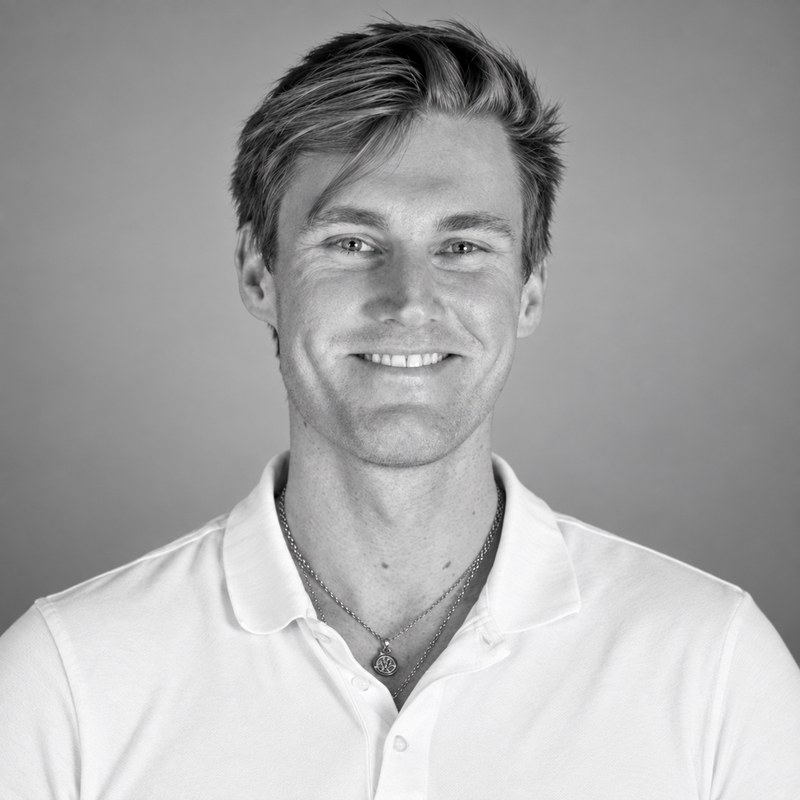
Patrick Beaumont

Patrick Beaumont

Clinical researcher, analyst and PhD candidate

I have worked in clinical research since 2021, coordinating investigator-initiated trials in private spine practice and running the analyses that come out of them. I am completing a PhD at The University of Queensland on the mechanisms of recovery from back pain, combining imaging, biomechanical testing, wearable activity data and patient-reported outcomes.

I have published on spine surgery outcomes, restorative neurostimulation and sport science, coordinated studies with combined funding over $500,000, teach at university level, and work day to day in SPSS, R, Python and REDCap.

Most of the useful turns my career has taken started with someone answering an email they had no reason to answer, and none of them charged me for it. Student support is my way of returning the favour, and it is all this site is for.

Qualifications
BExSS, Australian Catholic University
GradCertClinExRehab, Australian Catholic University
BSc (1st Class Honours), University of the Sunshine Coast
PhD candidate, The University of Queensland
Certification
ICH Good Clinical Practice
Google Scholar profile Full publication list
05

What I do not do

These are the commitments that decide what I take on, and they apply just as strictly when the help is free.

  • I do not guarantee a significant result, and I will not select an analysis because it produces one. A well-reported null result is publishable.
  • I will not help you argue a conclusion set in advance. Industry funding and a strong prior hypothesis are both legitimate. Deciding the answer before the analysis is a different thing, and I will say so.
  • I do not write assessable work for students to submit as their own. The table below shows exactly where that line sits.
  • I do not put your data into AI tools, and nothing I deliver is AI-generated.
  • I do not accept authorship in exchange for help. Where a contribution genuinely meets authorship criteria, that is a separate conversation held on its merits. Where I draft text for a manuscript, that contribution should be disclosed, at minimum in the acknowledgements.
  • I do not give clinical or medical advice. This is research and methodological work, and nothing produced here concerns the care of an individual patient.

Where the line sits on student work

A thesis is examined. A journal article is not. That difference decides what I will do.

 Thesis or assessmentJournal manuscript
Run the analysis and supply the codeYesYes
Explain the output so you can write it upYesYes
Advise on method and designYesYes
Write the results textNoYes
Edit text you have writtenFeedback onlyYes
Write the discussion or interpretationNoNo

If your institution's rules are stricter than this, theirs apply. Tell me what they say before we start, and declare the assistance you have received.

06

Get in touch

Tell me what you are working on and where it has gone wrong. I reply within one to two business days, and there is no wrong way to write the first email.

If you have them to hand, your research question, your design and sample size, the software you use and your deadline all help. If you do not, write anyway. No participant data, please.

Sore Spine Research
Brisbane, Queensland, Australia
ABN 38 289 504 661

Students and researchers across Australia and internationally. Sessions are held online.